Nikon’s APS-C Z-mount ecosystem is finally coming into its own. While the “DX” range of lenses and cameras hasn’t expanded as quickly as Nikon’s full-frame Z line, the addition of the third party lenses below show that it’s steadily filling out in a well-balanced way. With the arrival of the Nikon Z 16-50mm f/2.8 VR and the arrival of several impressive fast primes from third-party makers, most photographers will find the system more than capable for their needs.
On the camera side, Nikon now offers something for everyone in the DX lineup. At the top sits the excellent Nikon Z50 II, while those who prefer a bit of retro charm can reach for one of the best retro-looking cameras in the Nikon Z fc.
Z fc shooters also have some options of DX manual focus only glass, complete with distance markings and buttery smooth manual focus rings, such as the Voigtlander 23mm f/1.2 Nokton and the TTArtisan 23mm f/1.4.
And for vloggers or anyone who values a smaller form factor, the compact, viewfinder-less Nikon Z30 rounds out the range beautifully.
The Nikon Z30, is, in my opinion, a very underrated stills camera. It’s marketed as a vlogging or video-first camera, similar to Sony’s ZV-E10 series. However, unlike Sony, Nikon retains a proper mechanical shutter and a proper mode dial in the Nikon Z30, so it works well as a compact stills camera, even if you have little interest in video.
Of course, a high resolution body like the Nikon Z7 series or the Nikon Z8 and Z9 can also be used in DX mode with more than enough resolution left.
I’ve broken this list down into two groups: Nikon’s own DX lenses followed by third party autofocus lenses, then third party manual focus lenses (this part is in progress and is continuously updated). Each list is arranged from widest lens to longest lens, ultra-wide to telephoto.
While you can of course use full frame Z mount lenses on APS-C bodies, I won’t be listing full frame lenses here for now. If you only have a full frame Nikon Z body, however, you may also be interested in picking up a DX lens, perhaps as a smaller, lighter walk-around lens, especially for higher megapixel bodies which still give you lots of megapixels to play with when you shoot in DX crop mode.
Nikon DX Lenses:
Nikon Z DX Zoom Lenses
Nikon’s first-party DX zoom lens line-up for Z mount is fairly well rounded. It’s not (yet) as extensive as the F-mount DX line-up of the DSLR days, but it’s a well thought out range that covers all the basics. We have choices for everything from an ultra wide 12-28mm (18mm to 42mm-equivalent) to super telephoto (375mm-equivalent).
While the specs of most DX zooms may not be exciting for those who like bright apertures, don’t be fooled, they all have excellent optics and take full advantage of the Z-mount’s relatively larger diameter. As anyone who has used even the basic 16-50mm kit lens will tell you, optically, these lenses punch well above their weight. If there is one thing Nikon knows, it is glass. And despite the apertures of some of these lenses looking like “kit lens” apertures, their optical performance is anything but.
While it looks like Nikon is preventing Sigma and Tamron from releasing their f/2.8 zooms for Z mount, Nikon has released their own Nikon Z DX 16-50mm f/2.8 VR, one of the smallest lenses in its class, which should appease those looking for a fast, standard zoom for DX.
To date, every DX zoom lens from Nikon has VR (Vibration Reduction), even the 12-28mm ultra-wide zoom and the 16-50mm f/2.8. VR is Nikon’s branding for their in-lens image stabilization. VR is great in helping keep your images sharp when shooting at lower shutter speeds and also in stabilizing footage when shooting video.
Most of the Z DX lenses, except for the Nikon 16-50mm f/2.8 VR and the Nikon 35mm f/1.7 Macro, have plastic mounts. This may be an issue for long term durability, but it does help keep the weight down.
Nikon 12-28mm f/3.5-f/5.6 PZ VR DX
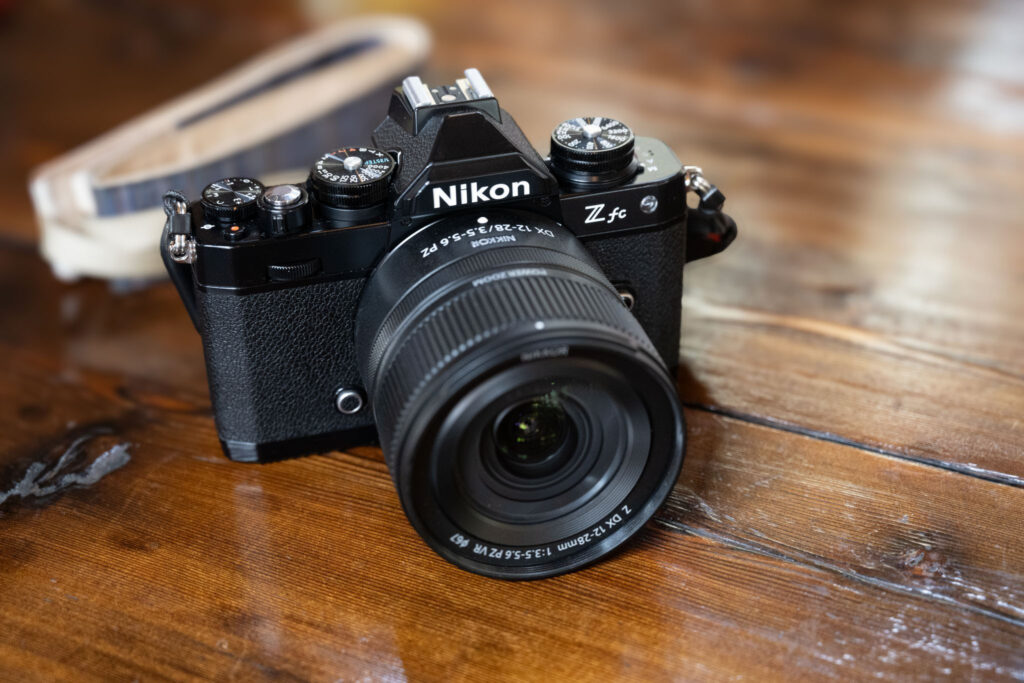
Probably the least popular lens in the current line-up, but it’s also the most interesting, in my opinion.
Covering a useful 18-42mm-equivalent field of view, this is a useful walk-around range, covering ultra-wide to normal.
The main thing that will probably make a lot of people stay away from this lens is that it’s a power zoom lens. That means the lens does not mechanically zoom. All zooming is electronic. Some people don’t like that, since it doesn’t feel as good as a real mechanical zoom and it’s also slower to zoom from the wide end to the longest end or vice versa.
The lens barrel also does not come with focal length markings, which to me, is the biggest con of this lens, much more than the power zoom mechanism itself, since this makes it near impossible to set the lens to exact focal lengths before shooting.
The way Nikon implemented the electronic zoom in this lens is pretty good. It handles a lot better than the power zooms found in older lenses from other systems. It’s still fairly smooth and well dampened. It’s a bit mushy, but it doesn’t feel dead or disconnected, if that makes sense. If you’ve never used pro-grade lenses with buttery smooth dampening, you may not even notice. If you haven’t used a power zoom lens in a while, you might be surprised at how much they have improved.
But, even if you view that as a negative, the power zoom mechanism also comes with its own unique advantages.
For video and for vloggers and content creators, the big plus is that you can zoom more smoothly, with none of the jerky motion of non-power zoom lenses. For stills photographers, the big plus is that the lens doesn’t extend outwards when zooming. This helps keep the elements out. The lens is sealed against dust and moisture, and a non-extending barrel will help even more. Now that I think about it, this kind of non-extending barrel design is actually very rare for an ultra wide lens, in any format.

Also unusual in an ultra-wide lens, but in keeping with the rest of the Nikon DX zoom lineup so far, the Nikon 12-28mm Z DX also has vibration reduction (VR) built-in. This is extremely useful especially for a lens that has relatively slower apertures (meaning you will be using slower shutter speeds more) and also for a lens that is desirable for vloggers and content creators because of its much wider field of view.
Specs:
Weight: 205 grams
Dimensions (LxW): 63.5 mm x 72 mm or 2.5 inches x 2.8 inches
Filter Size: 67mm
Check current street price: Nikon 12-28mm f/3.5-f/5.6 DX on Amazon
Nikon 16-50mm f/3.5-f/6.3 VR DX
This is one of my favorite standard “kit lenses” from any manufacturer. If I were to make a list of the top 5 standard kit lenses from any manufacturer, this lens would be near the top of that list.
The Nikon Z DX 16-50mm f/3.5-6.3 VR is Nikon’s ultra-compact kit zoom that you can get bundled with any of its DX-format Z-mount cameras. Designed to be as portable as possible, it features a retractable design that collapses when not in use, making it one of the smallest zoom lenses in Nikon’s lineup. The lens is built mostly from high-quality polycarbonate to keep the weight down to just around 135g, yet it still feels solid enough for everyday handling.
It delivers good sharpness in the center at all focal lengths, with performance peaking in the middle of the zoom range. Corners are softer at wider apertures but improve when stopped down. The lens controls chromatic aberration fairly well, and distortion is automatically corrected in-camera for JPEGs. Colors are vibrant, and contrast is pleasing, making it a dependable walk-around lens for general photography.
Just like most kit lenses, its aperture is modest but the inclusion of vibration reduction and excellent high-ISO performance of Nikon Z DX cameras helps claw back some of that light loss.
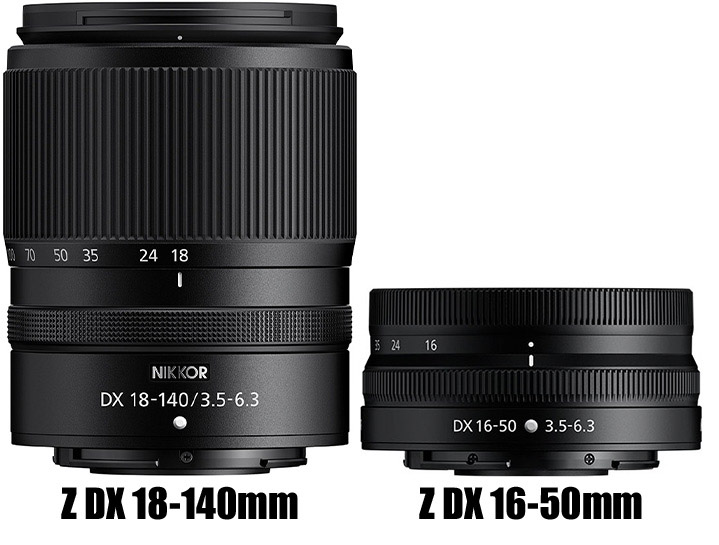
Specs:
Weight: 135 grams
Dimensions (LxW): 32 mm x 70 mm or 1.2 inches x 2.75 inches
Filter Size: 46mm
Check current street price: Nikon 16-50mm f/3.5-f/6.3 VR DX on Amazon
Nikon 16-50mm f/2.8 VR DX
The arrival of this lens is a pleasant surprise. Now, we know why Nikon was preventing Sigma from releasing their 18-50mm f/2.8 in Nikon Z mount.
Coming in at a svelte 330 grams, just 40g more than the Sigma 18-50mm, this is the first Z-mount DX zoom to have a metal mount.
And, the big surprise here is that Nikon also adds VR, rated for up to 5 stops. This is welcome since none of Nikon’s Z DX bodies have IBIS, to date, but this also makes it a rarity: very, very few constant f/2.8 standard zooms have image stabilization built in. The Canon RF 24-70mm f/2.8 and 28-70mm f/2.8 zooms for Canon’s full frame RF mount have it, but that’s about it.
Nikon’s own 24-70mm f/2.8 II S lens for full frame Z mount doesn’t have VR. None of Sony’s are stabilized. Not even any of the micro-four thirds f/2.8 standard zooms, the OM System 12-40mm f/2.8 and the Panasonic Lumix 12-35mm f/2.8 have image stabilization built in.
That Nikon managed to provide a 16mm (24mm-equivalent) range and VR in a lens that is only 40 grams more than the Sigma 18-50mm f/2.8, a lens which has neither, is nothing short of incredible!
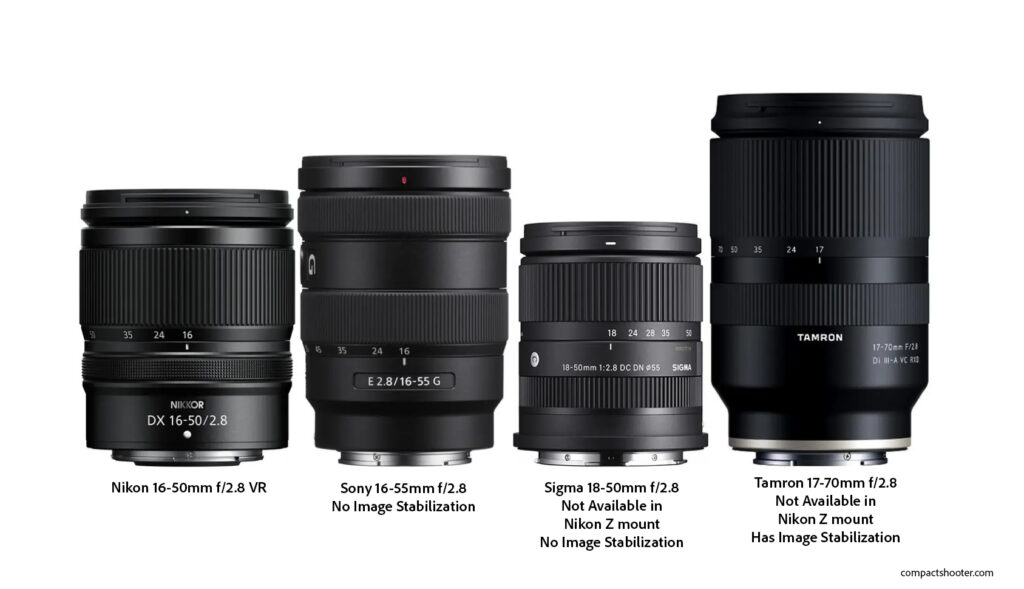
The Nikon 16-50mm f/2.8 is roughy the same size as the Nikon 18-140mm, below. If you are in search of the smallest f/2.8 standard zoom, this just might be it.
If you choose to use this lens on DX mode on a compatible full frame camera, the lenses VR is compatible with Nikon’s sync VR, which pushes VR to up to 5.5 stops. Sync VR is compatible with the Nikon Z9, Z8, Z6 III, Z5 II, Zf and Zr (as of October 2025).
The lens also features a customizable control ring (separate from the zoom and and focus rings).
From the limited early hands-on videos so far, this lens looks to be a real winner. Bokeh rendering looks to be smooth; focus breathing is well supressed.
This lens will be released on October 31, 2025, with pre-orders to begin around October 22, 2025.
Specs:
Weight: 330 grams
Dimensions (LxW): 88 mm x 74.5mm or 3.5 inches x 2.9 inches
Filter Size: 67mm
Check current street price: To be released on October 31, 2025, MSRP of $899.95 in the US.
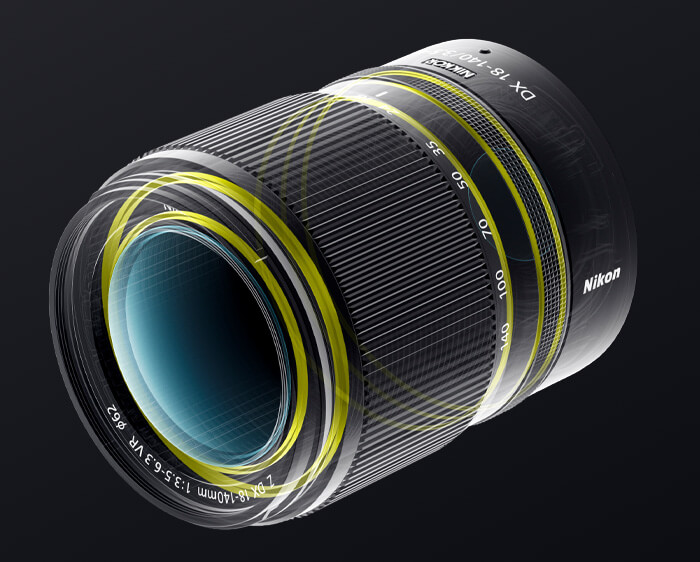
Nikon 18-140mm f/3.5-f/6.3 VR DX
The F-mount variant of this lens was one of Nikon’s most popular, and for good reason. It covers a versatile range in a small, lightweight package. Offering a full-frame equivalent range of 27–210mm, it covers everything from moderately wide angle to strong telephoto reach. If you’re looking for a do-it-all lens for travel or everyday shooting, this just might be it. Personally, I like pairing it with a small fast prime (such as the Nikon Z DX 23mm f/1.7 or the Viltrox 35mm f/1.7). Just two lenses and I’m good to go for most travel or vacation photography.
The build quality strikes a good balance between sturdiness and portability. It’s still mostly plastic (high-grade polycarbonate with a plastic mount, but it doesn’t feel creaky or cheap even though it’s a complete lightweight at around 315g.
And the best thing is it has weather sealing. According to Nikon, the lens is sealed against dust and moisture, HOWEVER, a closer look at the lens mount will show that it does not actually have the rubber gasket you expect in a weather sealed lens. Nikon says the tolerances are tight enough that drips and splashes won’t enter through the mount.
Optically, the 18-140mm delivers reliable performance across its zoom range, especially considering its ambitious focal length coverage. Center sharpness is good throughout, with the best results from wide to mid-range focal lengths. At 140mm, some softness and a drop in contrast can appear, but stopping down does improve things nicely.
It’s not as good as the Nikon Z DX 16-50mm in the shared range, but it’s close. And that is to be expected since this is a 7.8x zoom, after all.
The f/6.3 at the long end is a bit of a concern, but that’s the price to pay for a small, compact lens. The good news is the VR is effective even at full zoom. It’s still not the lens that you want if you want to shoot sports in low light (because you need high shutter speeds and the VR won’t be much help), but for static scenes in low light, the effective VR can be a lifesaver.
The strength of the 18-140mm lies in its unmatched versatility for a single lens. At 18mm, it’s wide enough for landscapes, cityscapes, and environmental portraits, while the mid-range is excellent for general street and event photography. Extending to 140mm opens up opportunities for some wildlife, day time sports, and distant details without needing to swap lenses. Its close focusing abilities, as close as 20–40 cm depending on focal length, also makes it suitable for capturing small subjects like flowers, food, or products.
Photographers who want a true “do-it-all” lens will find the Z DX 18-140mm VR an excellent choice. It’s perfect for travelers who want to pack light without sacrificing focal length options, for casual shooters who don’t want to constantly change lenses, and for vloggers or content creators who need flexibility in framing without carrying extra gear.

Specs:
Weight: 315 grams
Dimensions (LxW): 90 mm x 73mm or 3.54 inches x 2.87 inches
Filter Size: 62mm
Check current street price: Nikon 18-140mm f/3.5-f/6.3 VR DX on Amazon
Nikon Z 50-250mm f/4.5-f/6.3 VR DX
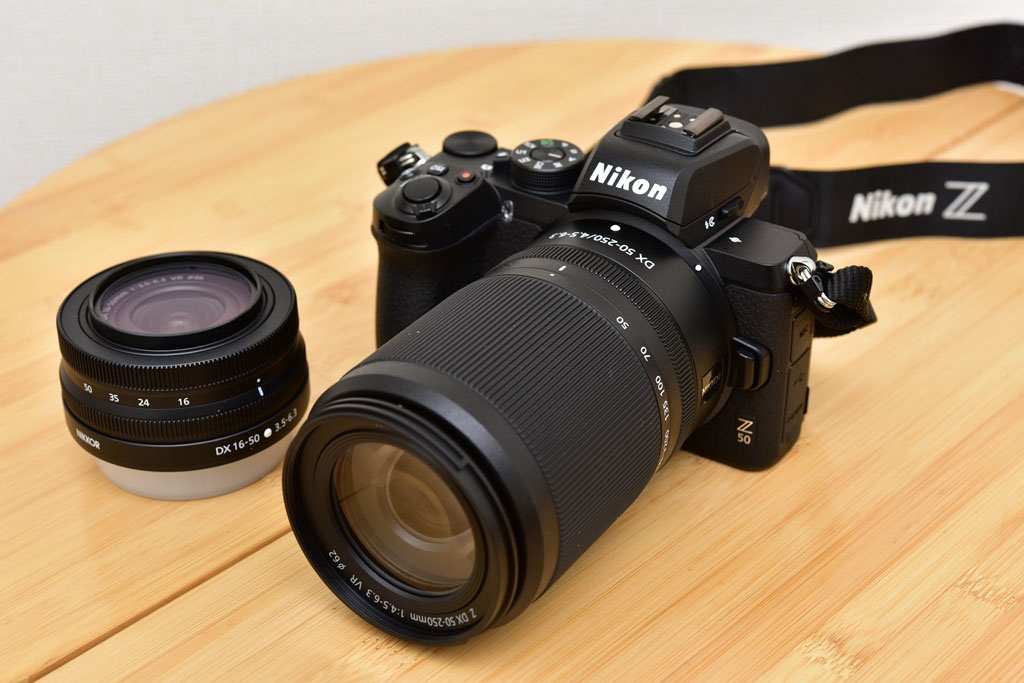
Covering a nice telephoto range of 75-325mm, this is the lens that made me take a long hard look at the Nikon Z mount APS-C line-up.
At first glance, 50-250mm sounds typical of telephoto kit lenses, Sony has the 55-210mm f/4.5-6.3, Canon has the RF 55-210mm f/5-7.1 and Fujifilm has the 50-230mm f/4.5-6.7. But, just like the Nikon Z 16-50mm kit lens above, the numbers are only part of the story. As I like to say, lens design is often a set of compromises, a good lens makes the right compromises. This is one of those lenses.
Coming it a fairly lightweight 405 grams, this isn’t the lightest lens in its class, but it does feature the longest reach while matching the Sony in aperture, meaning, it is brighter than the Fuji or Canon offerings. And, when you’re dealing with already slow apertures, every little advantage counts.
The Nikon also offers the best IBIS rating, being able to provide up to 5 stops of stabilization. In comparison, the Sony can only offer up to 4 stops (it is a lens first released in 2011, afterall); the Fuji offers up to 3.5 stops, while the Canon RF offers 4.5 stops of stabilization.
The Nikon features a collapsible lens design, which, while it helps keep the size down, adds an annoying step just before the lens is ready to shoot. The lens is in its collapsed position when it is retracted to its shortest length. In this position, the lens isn’t ready to shoot. When you turn on your camera with the lens in this position, you get a message asking you to extend (zoom the lens).
As you zoom from the retracted (fully collapsed position), the lens clicks into shooting position when you reach 50mm. At this focal length, the lens barrel already extends out a bit. The lens barrel gradually extends out, nearly doubling in length once you reach 250mm.
That’s really my only annoyance with this lens. But, again, that’s the price you pay to get a small footprint when not in use.

Otherwise, everything about this lens exceeds expectations. Vibration reduction (VR) works extremely well, consistently meeting Nikon’s stated 5-stops of improvement. The stepping motor is snappy, and rarely hunts even in low contrast situations. And while it isn’t as strong optically like the 16-50mm kit lens, it is still quite good, with the biggest issue being a slight drop in sharpness from 150mm and up. Nothing that a little bump in Lightroom can’t help with.
Overall, this is one of my favorite budget telephoto lenses for any system. It’s an excellent value, with a street price hovering around $400 or so. Paired with the 16-50mm kit lens above, you have a powerhouse two-lens kit that weighs just over 500 grams, while providing coverage from 24mm-equivalent to 325mm equivalent (13x).
Specs:
Weight: 405 grams
Dimensions (LxW): 110 mm x 74 mm or 4.3 inches x 2.9 inches
Filter Size: 62mm
Check current street price: Nikon Z 50-250mm f/4.5-f/6.3 VR DX on Amazon
Nikon Z DX Prime Lenses
As of this writing, Nikon has seen it fit to bless the DX line with just two prime lenses. But, both are real beauties!
Nikon Z DX 24mm f/1.7

While it isn’t quite a pancake lens, the Nikon Z DX 24mm f/1.7 is a fairly compact lens. It is roughly the same size as the Nikon Z 16-50mm kit lens when the kit lens is in its collapsed state, and it is exactly the same weight as the 16-50mm. For an f/1.7 prime, that’s pretty good!
With a field of view equivalent to about 36mm in full frame terms, this is the perfect walk around focal length for a lot of people. f/1.7 on an 24mm APS-C prime is also more than enough to get you some control over your depth of field. It’s not a bokeh-licious portrait lens, but it is more than good enough for blurring backgrounds in environmental portraits.
That versatility is exactly why a “fast 35mm” has become a mainstay in many photographers’ kits. Some shooters might lean toward a fast f/2.8 zoom, but options for Nikon Z DX are non-existent as of this writing – Sigma’s 18–50mm f/2.8, for instance, isn’t offered in Z mount. A fast f/1.7 prime brings a different kind of flexibility. Not only is it more than a full stop brighter than an f/2.8 zoom, but its compact size makes it far easier to carry. No f/2.8 zoom can come close to being this small. It’s simply a matter of physics. It’s the age old zoom vs prime debate. But, since you don’t really have walk around f/2.8 zoom options for Nikon Z at this time, it’s a bit moot. You can pair this with the 16-50mm kit lens, for example, and you’ve got everything you need for 98% of situations.
Specs:
Weight: 135 grams
Dimensions (LxW): 40 mm x 70 mm or 1.5 inches x 2.75 inches
Filter Size: 46mm
Check current street price: Nikon Z DX 24mm f/1.7 on Amazon
Nikon Z DX 35mm f/1.7 MC Macro
Unlike the 24mm f/1.7 above, this lens has no pancake aspirations. It is almost double the 24mm f/1.7 in physical length. It’s the same length as the Fujifilm 30mm f/2.8 macro, for example. But this Nikon is more than a full stop brighter than the Fuji.
Nikon’s decision to also make this a macro lens is interesting, as it adds versatility to this lens. Although, if you have no interest in macro, and just wanted a “fast fifty” equivalent for Nikon DX, I wonder how the macro function will affect usability. There is no focus limiter, for example. If you want a no-frills ‘fast fifty’ with none of the macro stuff, you may want to take a look at the Viltrox 35mm f/1.7 Air.
But, if you do need a macro, then this looks to be a great choice. With a minimum focus distance of 0.16 meters, this lens is capable of ‘life size’ magnification, at 0.67x reproduction. That’s a working distance of about 6cm from the tip of the lens hood.
Although this is an f/1.7 lens, it drops to an effective f/3.2 aperture at the minimum focus distance. This is normal for macro lenses. Conversely, the minimum aperture at close focus goes to f/22, but is limited to f/16 at infinity and normal shooting distances.
This lens will be released on October 31, 2025, with pre-orders to begin around October 22, 2025.
Specs:
Weight: 220 grams
Dimensions (LxW): 72 mm x 70 mm or 2.83 inches x 2.75 inches
Filter Size: 52mm
Check current street price: To be released on October 31, 2025, MSRP of $449.95 in the US.
Third Party Auto Focus Lenses (DX):
Tamron Zoom Lenses for Nikon Z DX (APS-C)
That’s a pretty short list, right?
For its Z mount, the rumor mill indicates that Nikon has chosen to license its mount only under certain conditions, namely, a lens must complement the existing Nikkor Z lens lineup, not directly compete with it and, Nikon reviews/approves these on a lens-by-lens basis.
While the list of Tamron lenses for Nikon Z full frame is longer than this, not including the Tamron lenses that were rehoused by Nikon (e.g. Nikon 28-75mm f/2.8, which is a rehoused Tamron 28-75mm f/2.8 G1), the list for APS-C is even shorter, with only one zoom lens as this writing.
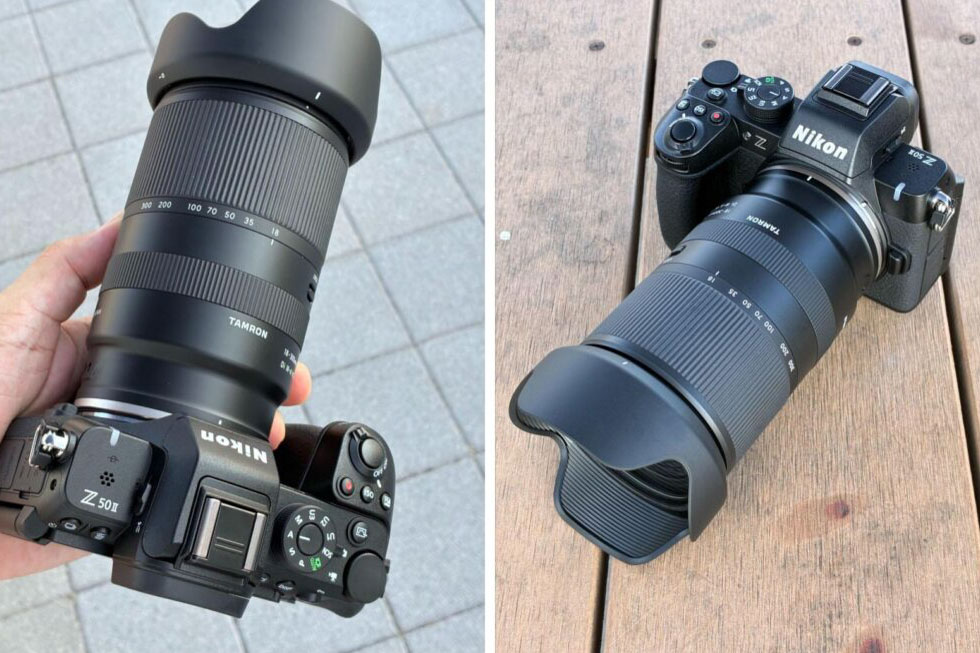
Tamron 18-300mm f/3.5-6.3 Di III-A VC VXD Lens
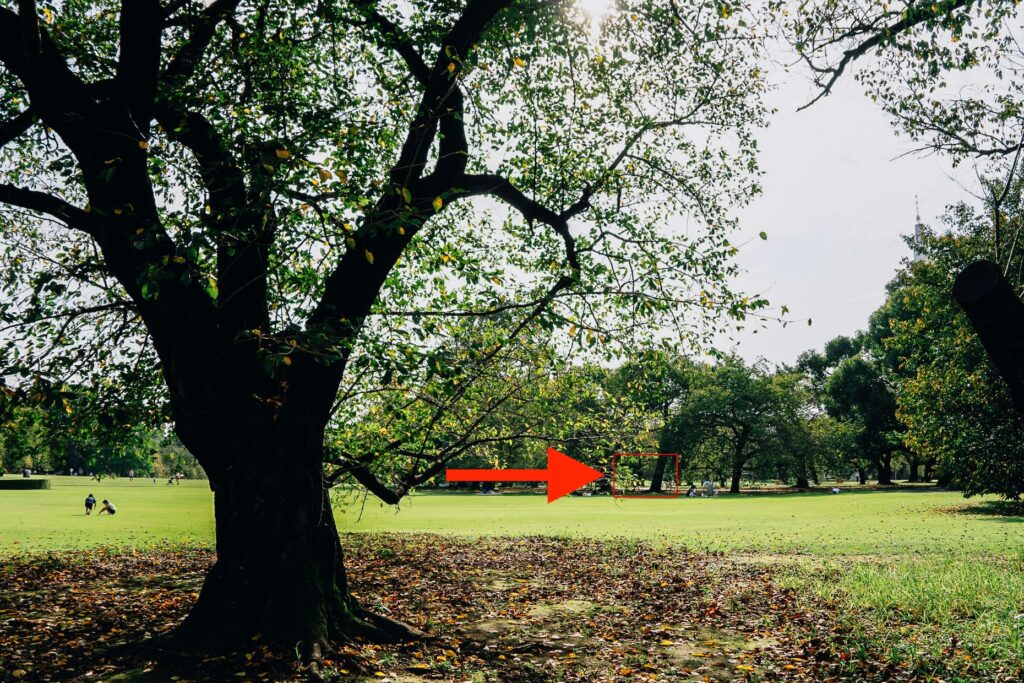
Covering a whopping 27-450mm equivalent range, this lens really shows off Tamron’s expertise in making superzooms.
Below, you can see the incredible range of this lens, with an image shot at 18mm (27mm-equivalent) and then zoomed in to 300mm (450mm-equivalent).

If you’re looking for a do-almost-everything lens, this is probably at the top of your list. Backpacking, Disney land, daylight sports, a little bit of wildlife, travel, doesn’t matter what you’re looking to do, this lens has something for you.
As with most superzooms, this lens is a collection of compromises. But, Tamron once again shows that they superzooms better than anyone else.
The lens is sharp in the center throughout the whole range. While the corners never quite get there, they are always acceptable. Certainly nothing that you wouldn’t expect from a superzoom. Contrast and resolution are good, if nothing to write home about, BUT, its better than pretty much any other superzoom out right now.
Vibration Compensation (VC), Tamron’s nomenclature for their VR or image stabilization, works well here, especially on the long end, where you need it the most, giving up to 5 stops of improvement.
For beginners, the biggest advantage of this lens is its versatility. Its broad zoom range lets you experiment with a variety of photographic styles – from wide-angle landscapes to wildlife or sports shots and even 1:2 macro. With a 16.6x zoom ratio, it’s wide enough to serve as an excellent all-rounder, giving you a solid feel for different types of photography while helping you decide which direction to go when choosing future lenses.
Specs:
Weight: 635 grams
Dimensions (LxW): 127.6 mm x 75.5 mm or 5 inches x 2.9 inches
Filter Size: 67mm
Check current street price: Tamron 18-300mm f/3.5-6.3 Di III-A VC VXD on Amazon
Sigma Prime Lenses for Nikon Z DX (APS-C)
No surprises from Sigma here. The first three lenses they released for Z mount are their venerable f/1.4 trio. The big surprise is, in fact, that they haven’t released more.
The three lenses below have saved many systems over the years, providing quality f/1.4 prime options where availability of first-party prime lenses have been lacking. And the Nikon Z mount in DX is no exception. What is surprising though is that Sigma has yet to announce Z mount versions of their newer APS-C lenses such as the Sigma 23mm f/1.4, Sigma 12mm f/1.4 or zooms like the Sigma 18-50mm f/2.8 and 10-18mm f/2.8.
The word on the street is, Nikon only ‘allows’ Sigma to produce lenses that won’t directly compete with their own offerings. Maybe thats a sign that Nikon intends to produce f/2.8 zooms and more primes for DX, but to date, there aren’t even any rumors of any.
Sigma 16mm f/1.4 DC DN Contemporary
A staple in the bags of most APS-C shooters’ in other systems, the Sigma 16mm f/1.4 was first released for Sony E mount and Olympus and Panasonic Micro-four Thirds back in 2017. With the growing popularity of vlogging in the years since, it has only gained in popularity.
With a 24mm-equivalent field of view (about the same as the main, 1x camera, on most iPhones after the iPhone 15 Pro), this is a great walk around lens for those, like me, who prefer a wider field of view.
Having f/1.4 and close focusing (25 cm) coupled with the APS-C sensor of DX cameras, allows for some great control over depth of field. The 9-bladed diaphragm also helps in creating the smooth bokeh this lens is known for.

This is the biggest lens in this trio, but, depending on your shooting style, it is probably the most versatile. Like I said, it’s the same as the main camera on most iPhone’s released in the past couple of years. If that’s how you see the world, this is going to be your only option for Nikon Z DX currently.
24mm-equivalent is significantly wider than the 36mm-equivalent field of view of the Nikon Z DX 24mm f/1.7 above. It all comes down to shooting style, and what other lenses you have, but this Sigma and the Nikon DX 24mm f/1.7 are probably the top two choices for walk-around primes for Nikon Z DX shooters currently.
Specs:
Weight: 405 grams
Dimensions (LxW): 92.3 mm x 72.2 mm or 3.6 inches x 2.8 inches
Filter Size: 67mm
Check current street price: Sigma 16mm f/1.4 DC DN Contemporary on Amazon
Sigma 30mm f/1.4 DC DN Contemporary
With a field of view equivalent to that of a 45mm lens on full frame, this lens would make for an excellent pair with either the Nikon 16-50mm kit lens or the Nikon 18-140mm ultrazoom.
Offering a wider view than the “normal” 50mm field of view, the Sigma 30mm f/1.4 is a popular choice for a walk around lens for those who prefer a tighter look vs the more popular “35mm” or wider field of view. Because it’s a longer focal length and has a brighter f/1.4 aperture vs the Nikon 24mm f/1.7, it is capable of more subject isolation than the Nikon.

If you prefer a wider look, Nikon’s 24mm f/1.7 or the Viltrox 25mm f/1.7 Air (below) would probably serve you better. But, if you tend towards a more normal or more portrait framing, with more control over subject isolation, the Sigma 30mm f/1.4 may be your best choice. It’s bigger and heavier than the Nikon 24mm or Viltrox 25mm, but it is also f/1.4.
Specs:
Weight: 285 grams
Dimensions (LxW): 73.3 mm x 64.8 mm or 2.88 inches x 2.55 inches
Filter Size: 52mm
Check current street price: Sigma 30mm f/1.4 DC DN Contemporary on Amazon
Sigma 56mm f/1.4 DC DN Contemporary
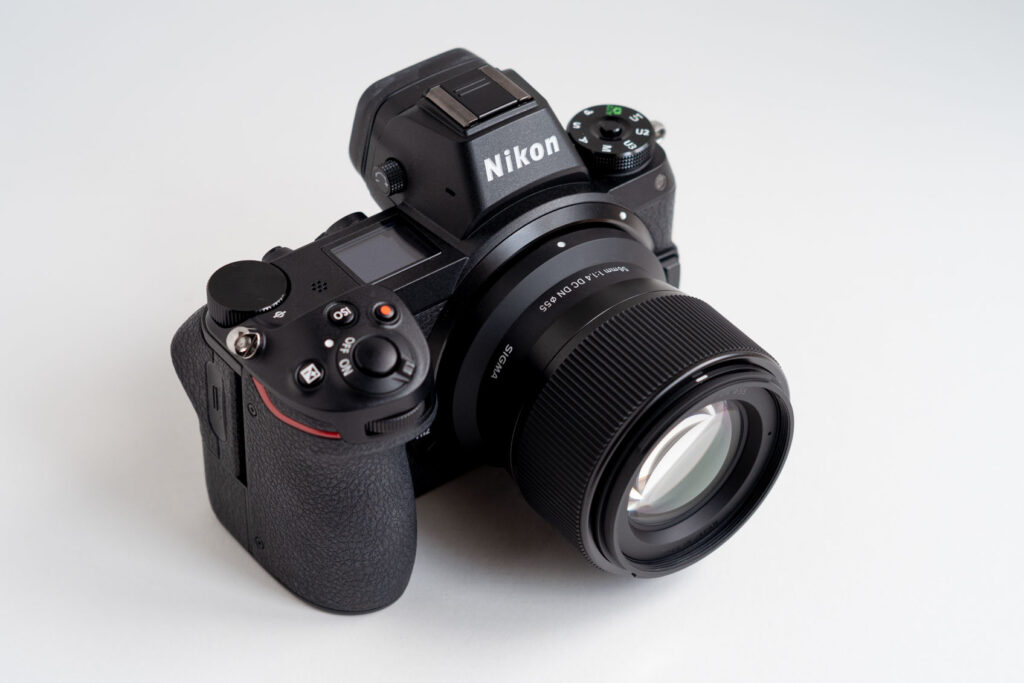
Beautiful fall-off and smooth, pleasant bokeh. That’s really all you need in a portrait lens, and the Sigma 56mm f/1.4 delivers that, in spades.
Like the other f/1.4 primes above, build quality is fairly no frills. It’s plastic, but it doesn’t feel cheap. There are no fancy features like an aperture ring or a customizable button here. But, it delivers where it counts. AF is snappy, and the optics are excellent. It’s the star of the show, without being the star of the show, if you know what I mean. The bokeh rendering is smooth and beautiful, yet it’s very neutral. It’s not trying to steal the show.
Having a portrait lens of this quality, at this size and price is what APS-C is all about. If you moved to mirrorless, and chose to shoot APS-C instead of full frame because of size and weight, then this lens is one of the best examples of that.
Specs:
Weight: 295 grams
Dimensions (LxW): 59.5 mm or 66.5mm or 2.3 inches x 2.6 inches
Filter Size: 55mm
Check current street price: Sigma 56mm f/1.4 DC DN Contemporary on Amazon
Viltrox Prime Lenses for Nikon Z DX APS-C
With Sigma and Tamron slow to bring their lenses to the Z mount – with Nikon seemingly holding back certain releases – Viltrox has really stepped in to fill the gap. Their Pro series delivers the kind of build and optical quality that experienced shooters are looking for, while the Viltrox Air line focuses on portability without sacrificing too much in performance. The Air line is also budget friendly, allowing new shooters to try out different focal lengths without breaking the bank.
As of this writing, a lot of these Viltrox lenses do not have any competitors in the Nikon Z DX line-up.
When paired with Nikon’s own DX zooms (above), these Viltrox primes plug a lot of the current holes in the first party lineup, and will allow any photographer to create a complete and versatile kit.
RELATED: Complete list of Viltrox lenses for Sony APS-C E-mount
I’m only including APS-C lenses down here, but Viltrox does have some compact full frame lenses for Z mount that may be of interest, such as the Viltrox 20mm f/2.8 Air.
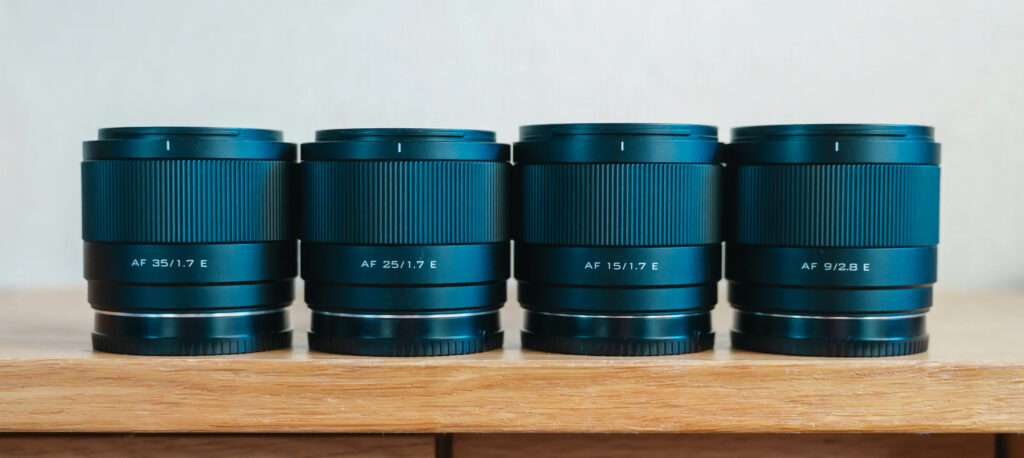
Viltrox 9mm f/2.8 Air
Offering the same field of view as the 0.5x lens on your iPhone, this ultra wide lens has no competition in Nikon Z mount.
Viltrox’s Air series plays a role today much like Sigma’s f/1.4 line did years ago: filling the gaps in camera makers’ lineups with well-priced, high-performing lenses that don’t skimp on optical quality.
While the first Air series releases focused on classic focal lengths: Viltrox 25mm, 35mm, and 56mm, we’re now seeing Viltrox branch out into more distinctive territory, starting with this lens.
High-quality ultra-wides are rare, even in other systems, and the fact that Viltrox can deliver us an f/2.8 aperture and excellent optics at this price and with this level of image quality is exactly why they’ve earned their reputation as one of today’s best third-party lens makers.
Specs:
Weight: 175 grams
Dimensions (LxW): 56mm x 65mm or 2.22 x 2.56 inches
Filter Size: 58mm
Check current street price: Viltrox 9mm f/2.8 Air on Amazon
Viltrox 13mm f/1.4
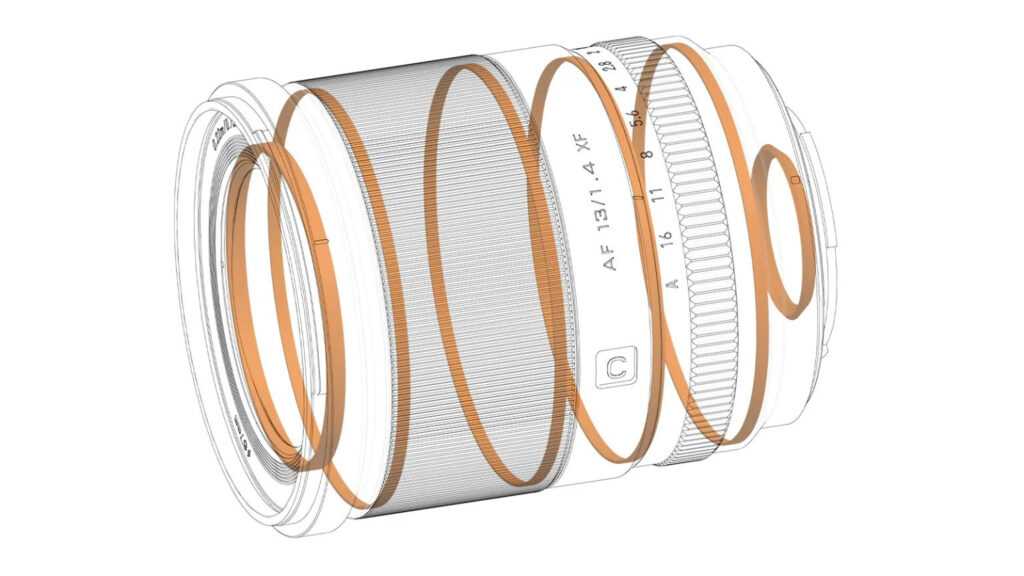
All metal build, aperture ring, non-bulbous front element. There’s a lot of things to love about this 20mm-equivalent f/1.4 lens.
And, it has zero autofocus alternatives in Nikon Z DX land.
Considering that the Nikon Z 20mm f/1.8 S for full frame retails for over $1000, this APS-C equivalent at less than half the price is an incredible value. ‘Scapes, night skies, interiors, ultra wide-angle portraits, vlogging, the bright f/1.4 aperture and the ultra-wide 94-degree angle of view makes this one of the most flexible lenses.
And in a move that video creators will love, this lens comes with a non-bulbous front element, able to take 67mm filters. This was also one of the first Viltrox lenses to come with weather seals.
Specs:
Weight: 420 grams
Dimensions (LxW): 90mm x 74mm or 3.5 x 2.9 inches
Filter Size: 67mm (non-bulbous front element)
Check current street price: Viltrox 13mm f/1.4 on Amazon
Viltrox 15mm f/1.7 Air
With a field of view equivalent to about 22.5mm on full frame, the Viltrox 15mm f/1.7 offers a field of view very similar to the main 1x camera on most modern iPhones and smartphones (24mm). It’s a familiar, natural view that feels instantly comfortable to shoot with.
This puts it squarely against the best-selling Sigma 16mm f/1.4, a lens popular with photographers and creators across many other camera systems, but whose main drawback has always been its size. The Viltrox, on the other hand, measures just 56mm in length, making it almost half as long as the Sigma’s 93mm body.
This 15mm Air is the only lens in the Air series priced above $200, but for me, the versatility alone makes it worth it. This is probably my favorite lens of the Air lineup, a true all-rounder that fits the way I like to shoot. Whether it’s travel photography, street scenes, cityscapes, environmental portraits, or even casual vlogging, the 15mm f/1.7 is like a chameleon, adapting well to almost any shooting circumstance you find yourself in.
Specs:
Weight: 180 grams
Dimensions (LxW): 56mm x 65mm or 2.55 inches x 2.2 inches
Filter Size: 58mm
Check current street price: Viltrox 15mm f/1.7 Air on Amazon
Viltrox 25mm f/1.7 Air
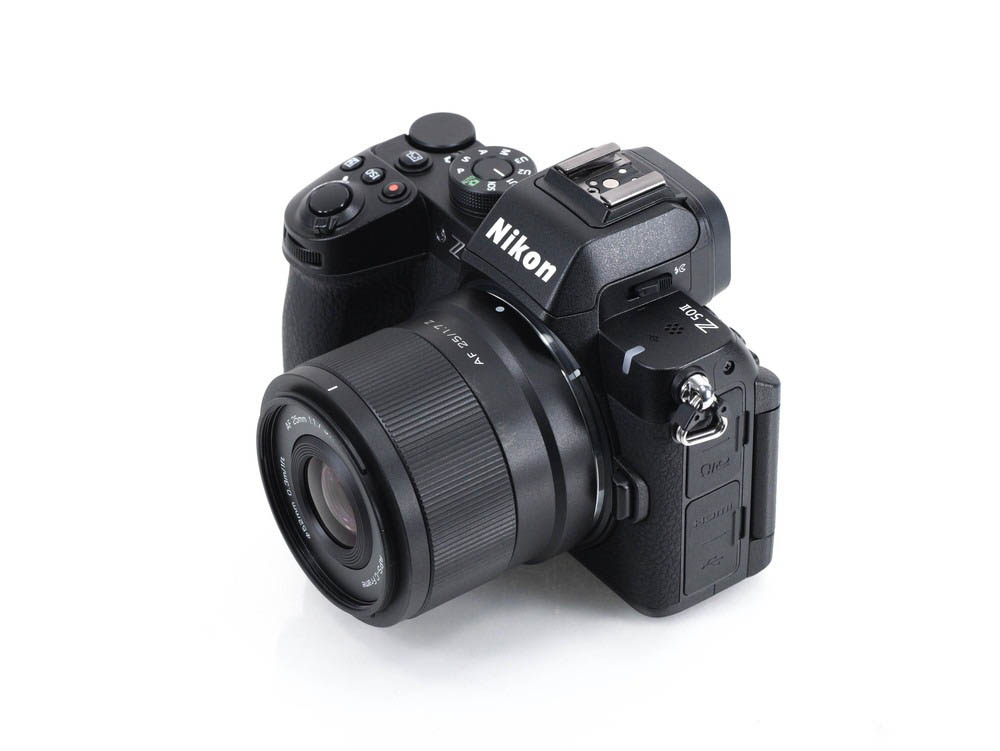
Given that Sigma has not yet released the Sigma 23mm f/1.4 in Nikon Z mount, this is the only competitor to the Nikon Z DX 24mm f/1.7 at this time. This lens is physically longer and thinner than the Nikon, but it’s still definitely a compact lens. If the absolute smallest size is what you’re looking for, the Nikon is definitely what you should pick.
But, this Viltrox is an interesting alternative. Offering a slightly longer 37.5mm-equivalent field of view (60 degrees), the angle of view is actually closer to that of a 40mm-equivalent lens than the ‘classic’ 35mm focal length. Just something to think about.
If you were looking for the DX equivalent of the excellent Nikon Z 40mm f/2 for full frame, this Viltrox just might be what you’re looking for. Think of it as a ‘tweener between the classic 35mm and 50mm focal lengths.
Specs:
Weight: 170 grams
Dimensions (LxW): 64mm x 56mm or 2.51 x 2.2 inches
Filter Size: 52mm
Check current street price: Viltrox 25mm f/1.7 Air on Amazon
Viltrox 35mm f/1.7 Air
This is Viltrox’s take on the classic “nifty fifty” – and what a lens it is.
While the 50mm (equivalent) focal length has become a bit less popular over the past decade, as many photographers gravitate towards wider wider focal lengths, “50mm” remains one of the most versatile and natural-looking field of views available.
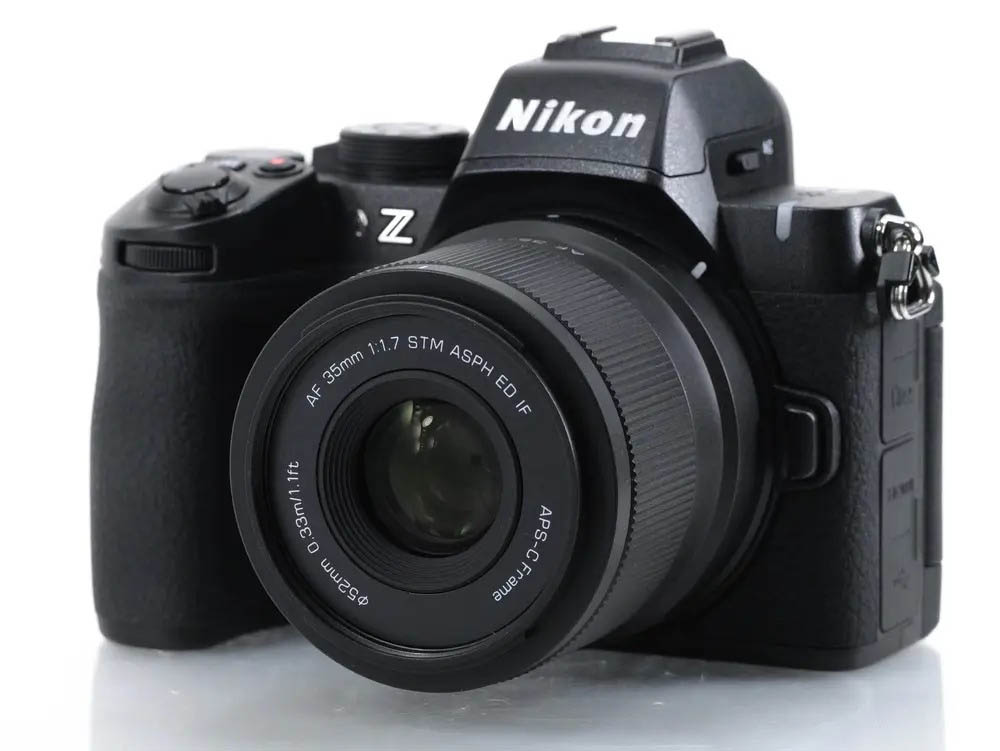
Like the 25mm f/1.7 Air lens above, this lens is wide enough to capture environmental portraits, street scenes, or documentary-style moments with context, yet tight enough to avoid noticeable distortion. The tighter view that this lens provides has an intimacy that the wider Viltrox 25mm f/1.7 or Nikon 24mm f/1.7 can’t quiet match. The added benefit of a fast f/1.7 aperture in a longer focal length, gives you added control over depth of field.
That flexibility makes it useful for everything from tighter portraits and travel shots to food, products, and even landscapes. Though it’s not as popular as it once was, the 50mm’s balance of perspective, speed, and versatility still makes it the go-to “everyday” lens for many photographers.
Specs:
Weight: 170 grams
Dimensions (LxW): 54.7mm x 64mm or 2.1 inches x 2.5 inches
Filter Size: 52mm
Check current street price: Viltrox 35mm f/1.7 Air on Amazon
Viltrox 56mm f/1.7 Air
Similar to the Sigma 56mm f/1.4 lens above, with a field of view equivalent to about 84mm on full frame, this lens is the perfect portrait focal length – long enough to flatter facial features and provide background separation, yet still short enough to use comfortably indoors or in tighter spaces.
Weighing in at 170 grams and measuring about 2 inches in length, this is smaller and lighter than the Sigma 56mm f/1.4, as expected. It’s a lens that slips easily into any small camera bag, making it a great “just in case” option to bring along on any shoot.
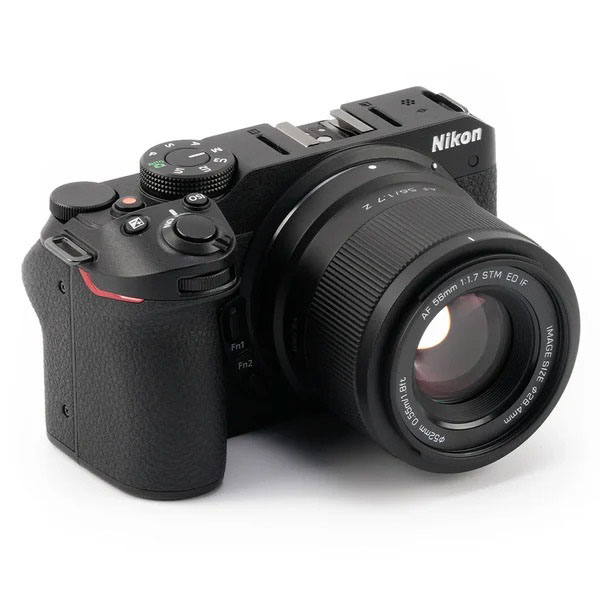
If you’re not looking to spend more for the Sigma 56mm f/1.4, the Viltrox 56mm f/1.7 Air is an excellent alternative for Nikon Z shooters.
Specs:
Weight: 170 grams
Dimensions (LxW): 54.3mm x 65mm or 2.13 x 2.56 inches
Filter Size: 52mm
Check current street price: Viltrox 56mm f/1.7 Air on Amazon
Viltrox 27mm f/1.2 Pro
With an amazingly bright f/1.2 aperture, this lens and the 75mm f/1.2 Pro (below) provides a pair of truly premium options for the DX Z shooters.
In contrast to their Air line, the Pro line isn’t too concerned with compactness and convenience. Here, Viltrox aims to deliver a premium experience – metal build, aperture rings and dust and splash resistance and excellent sharpness even wide-open at f/1.2.
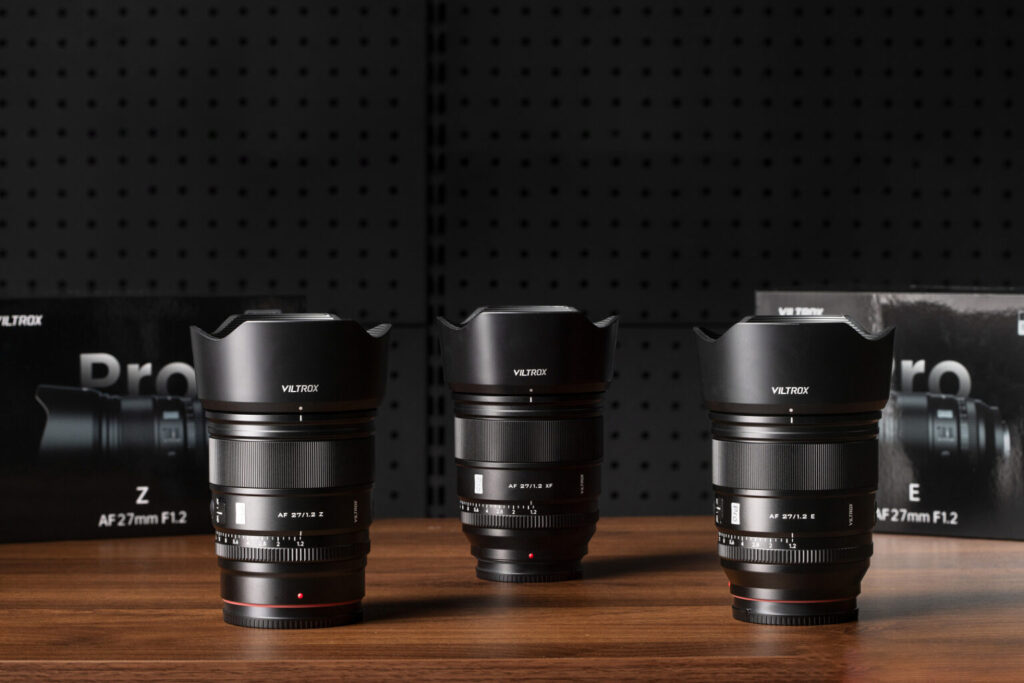
Although I am not typically a fan of big and heavy lenses, I’ve used this lens extensively in Sony E-mount, and I’m a fan. Although I’ve been a fan of the ~40mm field of view since the Panasonic Lumix 20mm f/1.7 for Micro Four Thirds (2x crop factor) and having had the Ricoh GR IIIx (40mm-equivalent compact camera) in my pocket for the past couple of months, having a bright f/1.2 prime in this range is a whole different thing.
Having a hefty 570 gram lens doesn’t necessarily scream “everyday carry” to me, which is what the aforementioned Panasonic Lumix 20mm and Ricoh GR IIIx were to me, but having the ability to open up to f/1.2 on this lens also opens up so many more possibilities that I just couldn’t do with the Lumix or the Ricoh GR IIIx.
It’s big, but not obscenely so. On a Nikon Z50 or Z50 II, it’ll feel right at home. On a Nikon zfc without an external grip, it’ll be front heavy, though.
In hand, this feels like a serious piece of gear, and optically, it delivers as well. f/1.2 isn’t a gimmick on this lens, it is bitingly sharp wide-open. The only concerns are vignetting, but that is to be expected with such a bright lens and it can be alleviated somewhat in post (up to two stops).
Overall, size and weight aside, there really isn’t much to complain about here. If you don’t like big and heavy lenses, you already won’t be looking at this lens. If you can get past the size and weight, this is as good as it gets.
Specs:
Weight: 560 grams
Dimensions (LxW): 92mm x 82mm or 3.6 x 3.2 inches
Filter Size: 67mm
Check current street price: Viltrox 27mm f/1.2 Pro on Amazon
Viltrox 75mm f/1.2 Pro
Fast, telephoto primes designed from the ground up for APS-C just aren’t a thing. You have the Fujifilm 90mm f/2 and the Olympus 75mm f/1.8 for Micro Four Thirds, but that’s about it. Most of these “telephoto portrait” primes are typically designed for full frame. If you wanted one for APS-C, you typically purchased a full frame 85mm f/1.8 lens, instead.
With a field of view equivalent to about 112.5mm, this is the lens to reach for when you want to turn backgrounds to butter in full body portrait shots.
And, if you’re like me, a lens like this just isn’t a lens that sees a lot of use. It’s a lens that comes out on special occasions when you need that special look. That’s one reason why I’ve always been hesitant to drop the $$$ for a dedicated 135mm lens for my full frame systems. It’s a huge outlay for something that I won’t be using a lot. But, it can’t be argued, even if it’s not a priority for you, the depth of field control that a fast telephoto gives you is something you want in your arsenal.
But, you don’t want to spend $2000 on something that you don’t want for most situations.
With this lens, Viltrox has come out with a very compelling offer. It’s smaller, lighter and significantly cheaper than your usual 135mm f/1.8 lens. In other words, for someone like me where this isn’t going to be a well used lens, it is suddenly worth it, just to be able to pull off the look once in a while.
This is a remarkable lens that has found a permanent place in my kit. A fast, telephoto portrait prime allows for some amazing creativity and unique looks, but is rarely available outside of full frame systems.

But, this Viltrox 75mm f/1.2 allows us to keep such a lens in our kit, without breaking the bank and without needing to step up to full frame. Even if you’re primarily a full frame shooter, but if you’re not a dedicated portrait shooter, it may be more cost effective to get this instead of lugging around a full frame 135mm f/1.8 lens.
Specs:
Weight: 670 grams
Dimensions (LxW): 101mm x 87mm or 4 inches x 3.4 inches
Filter Size: 77mm
Check current street price: Viltrox 75mm f/1.2 Pro on Amazon
First generation Viltrox f/1.4 prime lenses:
I don’t really recommend these lenses anymore. In my opinion, you’re better off getting either the Viltrox 25mm f/1.7 Air or the Nikon 24mm f/1.7 in place of the 23mm f/1.4 below; the Sigma 30mm f/1.4 or Viltrox 35mm f/1.7 Air instead of the 33mm f/1.4 below and; the Viltrox 56mm f/1.7 Air or the Sigma 56mm f/1.4 instead of the 56mm f/1.4 below.
- Viltrox 23mm f/1.4
- Viltrox 33mm f/1.4
- Viltrox 56mm f/1.4
TTArtisans Autofocus Lenses for Nikon Z DX (APS-C)
Not to be confused with 7Artisans (below). Despite their name similarities, these are two different companies that make both AF and MF lenses.
While some Chinese brands rebrand lenses from the same factories, that’s not the case with these two. TTArtisan and 7Artisans generally have their “own” designs. Both mostly take inspiration from classic Leica and Zeiss lenses, but they are not just rebranded or rehoused lenses from the same factory.
One practical distinction: TTArtisan lenses typically feature clicky aperture rings, whereas 7Artisans lenses are usually clickless.
TTArtisan 23mm f/1.8 AF
TTArtisan 27mm f/2.8 Pancake Lens
If you’re familiar with the popular 27mm f/2.8 pancake lens for Fujifilm X-mount, this is pretty much the same thing. The big difference is that this lens isn’t weather sealed. But, it does have an aperture ring, and it’s clicky, with distinct third stops. That’s also the main reason I recommend this over the 7Artisans 27mm f/2.8. Not only is the 7Artisans slightly bigger, it also does not have an aperture ring.
Bear in mind that this lens has a noisy stepping motor for AF, similar to the Fujifilm. If that bothers you, you’ll have to take a look at the Viltrox 25mm f/1.7 Air which has a much quieter AF motor, but the Viltrox isn’t a pancake lens.
TTArtisan 35mm f/1.8 II AF
TTArtisan 56mm f/1.8 AF
7Artisans Autofocus Lenses for Nikon Z DX (APS-C)
7Artisans 27mm f/2.8 AF
Sirui Autofocus Lenses for Nikon Z DX (APS-C)
You can save a bit by getting all Sirui “Sniper” lenses listed below in a 5-lens set. Alternatively, the Sirui 23mm, 33mm and 56mm f/1.2 are also available as a 3-lens bundle, while the 16mm and 75mm are available as a 2-lens bundle. The lenses are also available in three finishes: white, black or silver.
Sirui Sniper 16mm f/1.2 Autofocus Lens
Sirui Sniper 23mm f/1.2 Autofocus Lens
Sirui Sniper 33mm f/1.2 Autofocus Lens
Sirui Sniper 56mm f/1.2 Autofocus Lens
Sirui Sniper 75mm f/1.2 Autofocus Lens
YongNuo Autofocus Lenses for Nikon Z DX (APS-C):
Yongnuo YN 23mm f/1.4 DA DSM WL Pro Lens
Yongnuo YN 33mm f/1.4 DA DSM WL Pro Lens
Yongnuo YN 35mm f/1.8 DA DSM WL Lens
Yongnuo YN 50mm f/1.8 DA DSM Lens
Yongnuo YN 56mm f/1.4 DA DSM WL Pro Lens
Mieke Autofocus Lenses for Nikon Z DX (APS-C):
Meike 33mm f/1.4 AF Lens
Meike 55mm f/1.4 AF Lens
AstrHori Autofocus Lenses for Nikon Z DX (APS-C):
AstrHori AF 27mm f/2.8 Lens
Third Party Manual Focus Lenses for Nikon Z DX (APS-C only)
Voigtlander Manual Focus Lenses for Nikon Z DX (APS-C)
“Big glass” or “fast lenses” as they are more popularly known are always sought after for the unique look they give.
The ability to blur the background and make your subject pop can be both visually appealing and creatively powerful.
A lens with a wide maximum aperture, such as f/1.x, also shines in low-light situations, allowing you to keep ISO low and maintain cleaner image quality.
That said, autofocus lenses with these advantages often come with trade-offs: they tend to be larger, heavier, and more expensive, and their performance can vary quite a bit depending on the design and manufacturer.
This is where Voigtlander stands apart. Unlike many of the more affordable Chinese brands (listed below), Cosina’s Voigtlander lenses aren’t budget options. Instead, they’re designed to deliver fast apertures and exceptional optical quality, all while maintaining a compact form factor. This is thanks to their manual focus design. Fast lenses generally require a powerful autofocus motor to move large, heavy glass elements. By omitting that autofocus, Voigtlander can offer beautifully built, all-metal f/1.2 lenses with well-executed aperture rings in lenses similar in size to typical f/1.8 autofocus primes.
Voigtlander 23mm f/1.2 Nokton
One important thing to about these Nokton lenses is that they are less corrected compared to ‘modern’ lenses. If you’re used to the bitingly sharp rendering of most modern AF lenses, just be aware that you’re getting something different here. Some people describe these lenses as “muddy” or “unsharp”, but that just isn’t the case.
Here’s a link to a forum with various sample images from this lens, but shot on Fujifilm X-mount. Here’s another link to some samples. As you can see, this lens is plenty sharp, it just has a less clinical rendering.
This is also a lens that sings for black and white images. It’s one of my favorite lenses, and one that I wish Voigtlander made for every system. Highly recommended.

Voigtlander 35mm f/1.2 Nokton
Voigtlander D 35mm f/2 Macro Apo-Ultron
TTArtisan Manual Focus Lenses for Nikon Z (DX) (APS-C)
Despite the similar name, TTArtisan is not to be confused with 7Artisans (below). They are two different manufacturers.
Although a lot of the Chinese manufacturers have a tendency to rebrand lenses made from one factory, this does not appear to be the case with TTArtisan vs 7Artisans, at least based on the lenses I have used, including for other mounts such as Sony E and Leica M.
While their designs are sometimes riffs of vintage Leica and Zeiss lens designs, they tend to do their own thing compared to the other Chinese lens manufacturers that flood the market with rebranded and rehoused fast, compact lenses.
This seems to be more the case for TTArtisan, whose lenses do not appear to have the optical design as other Chinese lenses. But, some 7Artisans lenses in the past seemed to be duplicate copies of Meike lenses, for example.
They appear to use the same factory (DJ Optical) to make their lenses, but the designs (e.g. number of elements/groups) are not the same.
Another differentiation is that TTArtisan generally have clicky aperture rings while 7Artisans lenses generally have clickless aperture rings only.
TTArtisan is fairly popular with M-mount shooters, and even some full frame Sony and Nikon zf shooters, since they are a cheap way to get manual focus M-glass to be used with autofocus adapters. Kind of like a poor man’s Leica Q – where you can get autofocus + a lens with a built-in distance scale and a well-dampened manual focus ring in one.
TTArtisan 7.5mm f/2 Fisheye Lens
TTArtisan 10mm f/2.0 Lens
TTArtisan 17mm f/1.4 Lens
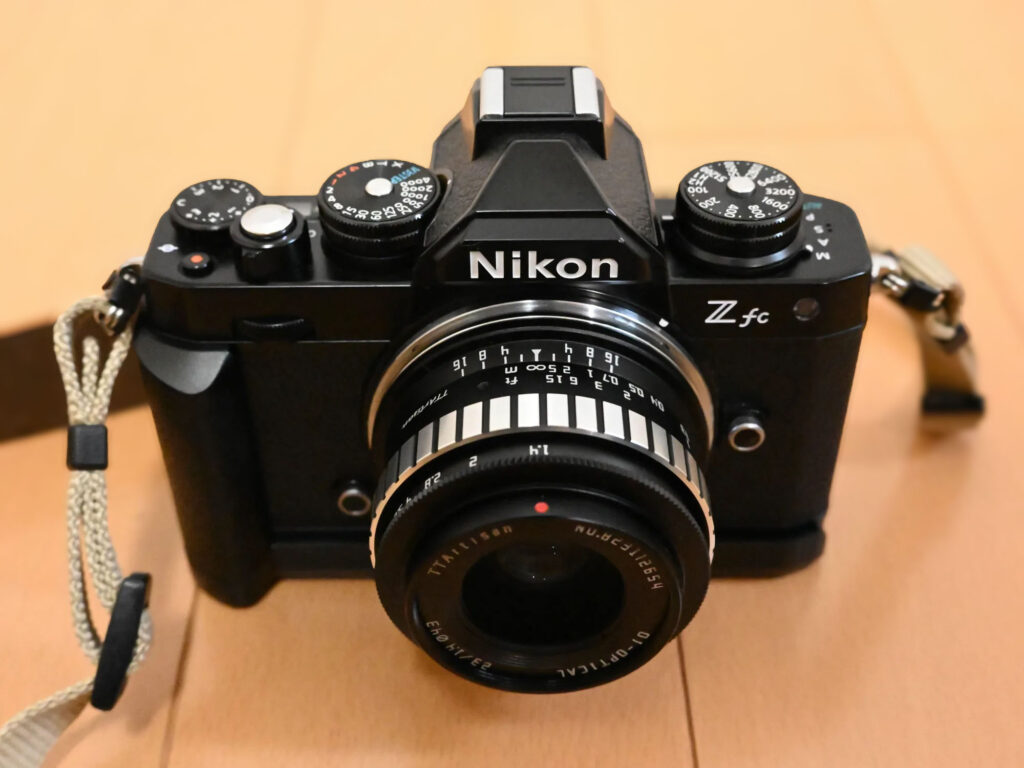
TTArtisan 23mm f/1.4 Lens
One of the more popular of the ‘cheap Chinese lenses’ available in most camera mounts these days. It’s small and light, built well, and has clearly written distance markings in both feet and meters.
If you’re looking for a cheap way to do some zone focused street shooting, this is one of the best choices.
TTArtisan 25mm f/2 Lens
TTArtisan 35mm f/1.4 Lens
TTArtisan 35mm f/1.4 Tilt Lens
TTArtisan 35mm f/0.95 Lens
TTArtisan 35mm f/1.4 Lens
TTArtisan 40mm f/2.8 Macro Lens
TTArtisan 50mm f/1.2 Lens
TTArtisan 50mm f/0.95 Lens
7Artisans Manual Focus Lenses for Nikon Z DX (APS-C)
Despite the similar name, 7Artisans is not to be confused with TTArtisan (above). They are two different manufacturers.
7Artisans 7.5mm f/2.8 Mark II
7Artisans 10mm f/3.5
7Artisans 12mm f/2.8 Mark II
7Artisans 18mm f/6.3 pancake lens
7Artisans 24mm f/1.4
7Artisans 25mm f/1.8
7Artisans 25mm f/0.95
7Artisans 35mm f/1.4 Mark III
Also available in a Titanium Gray version
7Artisans 35mm f/1.2 Mark II
7Artisans 35mm f/0.95
7Artisans 50mm f/0.95
7Artisans 55mm f/1.4 Mark II
7Artisans 60mm f/2.8 Mark II Macro
Mieke Manual Focus Lenses for Nikon Z DX (APS-C)
Meike 7.5mm f/2.8 Fisheye Lens
Meike 10mm f/2 Lens
Meike 50mm f/0.95 Lens
Artra Lab Hong Kong Manual Focus Lenses for Nikon Z DX (APS-C)
Artra Lab is a relatively new brand based out of Hong Kong, making lenses that riff on vintage Nikkor lenses, hence, their “Nonikkor” branding.
Artra Lab Oculilumen 7.5mm f/2.8 Fisheye
Artra Lab Oculilumen 10mm f/5.6 Fisheye
Artra Lab NONIKKOR-MC 11mm f/1.8
Artra Lab Latalumen 12mm f/2
Artra Lab Nocty-NONIKKOR 50mm f/1.2
Artra Lab NONIKKOR-MC 24mm f/1.7
This is a great option for anyone who wants a compact lens for zone-focused street photography. It’s about the same size as Fujifilm’s 18mm f/2, but unlike that lens, this one is fully manual with no electronic contacts. Its retro design takes inspiration from classic 1970’s Nikon AI-S lenses, making it a perfect visual match for the Nikon Zfc.
If you were disappointed that the Nikon 28mm f/2.8 kitted with the Nikon zfc didn’t quite match its retro looks, this lens is worth a look.
Zhong Yi Optics Manual Focus Lenses for Nikon Z DX (APS-C)
Mitakon Zhongyi Speedmaster 20mm f/0.95
Mitakon Zhongyi Speedmaster 35mm f/0.95 Mark II
Venus Optics Manual Focus Lenses for Nikon Z DX (APS-C)
Venus Optics Laowa 4mm f/2.8 Fisheye Lens
Venus Optics Laowa 10mm f/4 “Cookie” Lens
This tiny lens isn’t quite a pancake, hence the “Cookie” designation. Measuring just 25mm or 0.9 inches in length and weighing 130 grams, ultra wide lenses this small are pretty rare.
This is a fully manual lens, with no electronic contacts. While metering will work, the lens isn’t able to report aperture values to the camera, so no aperture will be recorded in your EXIF data.
Since it’s such a wide lens (15mm-equivalent field of view), depth-of-field is huge at every aperture. It’s got a soft, slightly glow-y look wide-open, but even at f/4 you can usually set the distance scale to 2 meters (6.5 feet) and everything will be in acceptable focus, unless your subject is closer than arm’s length.
This lens is perfect for casual, “point-and-shoot” style photography. And if you enjoy the lo-fi charm of toy cameras like the Holga, small and lightweight lenses with easy to read distance scales like this one are ideal for recreating that experience.
If you want an auto-focus lens in this focal range, check out the Viltrox 9mm f/2.8 Air.
Venus Optics Laowa Argus 33mm f/0.95 CF APO Lens
BastianK has a thorough review of the Sony E-mount version of this lens on PhillipReeve.net, if you are curious. It is surprisingly sharp at f/0.95 thanks to the floating element design. It has extremely high field curvature, which may not be desirable for some, but it helps add to the “3D pop” of this lens.
Don’t confuse this lens with the Argus 35mm f/0.95, that’s a different lens designed for full frame.
Venus Optics Laowa 9mm f/2.8 Zero-D Lens
Venus Optics Laowa Argus 25mm f/0.95 CF APO Lens
Venus Optics Laowa 8-16mm f/3.5-5 Zoom CF Lens
Venus Optics Laowa 12-24mm f/5.6 Zoom Shift CF Lens
NiSi Manual Focus Lenses for Nikon Z DX (APS-C)
NiSi 9mm f/2.8 Sunstar ASPH Lens
NiSi primarily makes lens filters, and their know-how in coatings shows in this lens. BastianK provided a thorough review of this lens on PhillipReeve.net and concludes that it is a great landscape lens, with notable flare resistance. And with a 10-bladed diaphragm, you can get some distinctive sunstars even wide-open!
AstrHori Manual Focus Lenses for Nikon Z DX (APS-C)
AstrHori 6.5mm f/2 Fisheye Lens
AstrHori 10mm f/8 II Lens
AstrHori 14mm f/4.5 Lens
AstrHori 18mm f/5.6 Shift Lens
AstrHori 18mm f/8 Macro Probe Lens
Brightin Star Manual Focus Lenses for Nikon Z DX (APS-C)
Brightin Star 7.5mm Fish Eye
Brightin Star 10mm f/5.6 PRO Fish Eye 175 degrees
Brightin Star 10mm f/5.6 Fish Eye 172 degrees
Brightin Star 12mm f/2
Brightin Star 35mm f/0.95 Night God Portrait Star
Also available in a killer looking Luminous version!
Great list!
Thank you
Hello , Thank you for this realy complete list and excellent analysis of the Z DX range .
As a big user of this segment i will come back here . Soon we will have to add the 3 new small Meike AF lenses that will compete with the Viltrox ones .
One thing that is worth mentioning in my opinion is the crazy flare resistance of the 16-50 and 50-250 “kit” lenses , this is really hard to find even in some way more expensive lenses and one of the reason i love my Z30 combo ( The 12-28mm ad the 24mm are also really good in this regard ) .